
It is common to avoid stress by not thinking about things that cause stress. However, that’s not often a tactic that actually works. When it comes to end-of-life planning, knowing that you have already taken care of everything you need can provide great peace of mind and mean that you can go on to make the most of the rest of your life. At WJ Blanchard Law, LLC, in Metairie, LA, we can take care of that for you with the help of an experienced estate planning lawyer.
What Legal Documents Should Be in Place for End-of-Life Planning?
End-of-life planning is an important component of responsible estate management and personal care. It will ensure that your wishes are honored, your loved ones are protected, and any unnecessary legal complications are avoided. In Louisiana, the state is governed by civil law rather than the common law systems of most other states, which means that certain end-of-life planning documents have distinct requirements and terminology.
Last Will and Testament
The Last Will and Testament is the most well-recognized estate planning document. It outlines how a person’s assets and property should be distributed upon their death. Louisiana recognizes two primary types of wills. The first is the Olographic Testament, a document which must be entirely handwritten, dated, and signed by the testator. No witnesses or notarization is required. The second is the Notarial Testament, which should be typed, signed in the presence of a notary and two competent witnesses, and includes a declaration clause that meets specific statutory requirements.
A valid will allows the testator to appoint an executor, specify asset distribution, and potentially name a guardian for minor children. However, you cannot necessarily do exactly what you want with your estate if the thing that you want to do is to disinherit your children.
Forced Heirship
Under Louisiana Civil Code Article 1493, certain heirs, specifically children under the age of 24 or children of any age who are permanently incapable of taking care of themselves, are entitled to a portion of the estate regardless of the terms of the will. These individuals are known as “forced heirs”, and their share is referred to as the “legitime.” This law limits your ability as the testator (the person making the will) to completely disinherit such heirs.
Durable Power of Attorney (Mandate)
In Louisiana, a Durable Power of Attorney is legally known as a “Mandate” or “Procuration.” This document allows you (legally known as “the principal”) to appoint another person (known as “the mandatary” or “agent”) to make decisions and manage affairs on your behalf if you become incapacitated.
A power of attorney can be limited or broad in scope. It becomes “durable” when it explicitly states that it will remain in effect even if the principal becomes disabled or incapacitated. For end-of-life planning, a durable power of attorney can cover your financial affairs, property management, and other legal matters. It is very important that this document includes language specifying durability, or it will become invalid when you become incapacitated, which would defeat its purpose in an end-of-life context.
Healthcare Power of Attorney (Medical Mandate)
A Healthcare Power of Attorney, or Medical Mandate, is a separate document that designates someone to make medical decisions on your behalf if you are unable to communicate or make decisions yourself. Though not required by Louisiana law, it is strongly encouraged to keep the medical mandate distinct from the general financial power of attorney. This can avoid confusion and ensure that the appointed agent is focused solely on medical issues.
- Make decisions about medical treatments
- Consent to or refuse medical procedures
- Access medical records under HIPAA
- Determine long-term care placement
Living Will (Declaration Concerning Life-Sustaining Procedures)
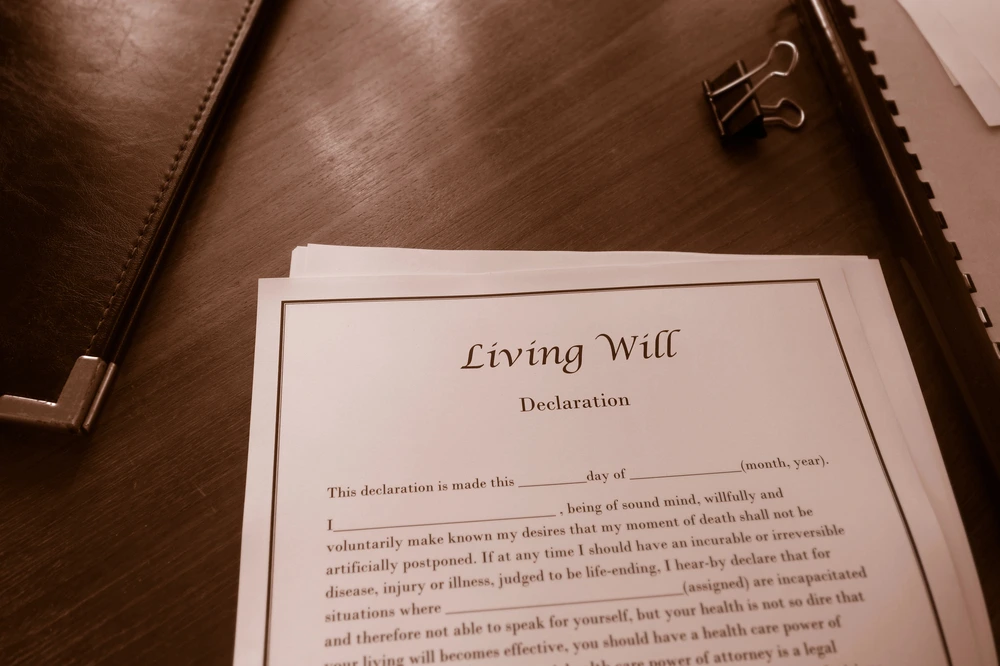
In Louisiana, a Living Will is legally termed the “Declaration Concerning Life-Sustaining Procedures.” This document allows you to declare whether you wish to receive life-sustaining treatment if you become terminally ill and are unable to communicate your wishes. The declaration can be revoked at any time, either in writing or orally. It generally includes information on your preferences regarding:
- Whether to receive artificial nutrition and hydration
- Whether to be placed on a ventilator or other life-support systems
- Under what circumstances should life-sustaining treatments be withheld or withdrawn
To be valid, the declaration must be:
- In writing
- Signed by the declarant
- Witnessed by two competent adults who are not related by blood or marriage and who will not benefit from the estate
Do Not Resuscitate (DNR) Order
A Do Not Resuscitate (DNR) Order is a medical order that informs healthcare providers not to perform cardiopulmonary resuscitation (CPR) if your heart stops or you stop breathing. In Louisiana, a DNR is governed by the Louisiana Department of Health and must be issued by a physician. Louisiana offers a Louisiana Physician Orders for Scope of Treatment (LaPOST) document, which includes DNR preferences. LaPOST is a voluntary medical order recommended for patients with serious illnesses or those at an advanced age. It covers:
- Resuscitation preferences
- Medical interventions
- Artificial nutrition and hydration
The LaPOST form must be signed by the patient (or their representative) and their physician and must be reviewed regularly for the document to remain legally valid.
Funeral and Burial Instructions
Although not legally binding unless part of a will or separate notarized document, you can provide instructions regarding:
- Burial or cremation preferences
- Religious or cultural rites
- Preferred funeral arrangements
In Louisiana, your funeral directives will usually be honored if expressed in a notarized written document or will. It is also a good idea to inform your next of kin or the executor of the will about your preferences.
Trusts
While not always associated directly with end-of-life care, trusts can be useful estate planning tools, particularly for those with minor children, significant assets, or complex family dynamics. Louisiana recognizes various forms of trusts, including Revocable Living Trusts, which allow the grantor to maintain control during their lifetime and avoid probate upon death, and Irrevocable Trusts, which are used for tax planning or asset protection and cannot be changed once created.
Designation of Guardian for Minor Children
If you are the parent of minor children, you should include a designation of guardian in your will or a separate document. While courts in Louisiana ultimately decide guardianship based on what they believe to be in the child’s best interest, they give great weight to a parent’s stated preferences.
Get the Help of an Estate Planning Lawyer in Metairie, LA
Each of the documents detailed above serves a distinct but interrelated purpose, ensuring that your financial matters, healthcare decisions, and personal wishes are addressed clearly and legally. In Louisiana, where laws such as forced heirship can affect estate distribution, it is particularly important to consult an attorney with experience working with the state’s legal system.
Contact Our Louisiana Estate Planning Law Firm For Help Today
If you are planning for the future or need guidance with wills, trusts, or probate in Metairie, Louisiana, contact the experienced estate planning attorneys at WJ Blanchard Law to schedule a consultation and protect your family’s legacy today.
We proudly serve New Orleans, Jefferson Parish, and the surrounding areas:
WJ Blanchard Law
2800 Veterans Blvd Suite 257
Metairie, LA 70002
Phone: (504) 313-7478
Hours: Mon-Fri 09:00-17:00
Our firm is located near you. We have an office in Metairie
Find us with our GeoCoordinates: 30.0014913,-90.1498979,893
